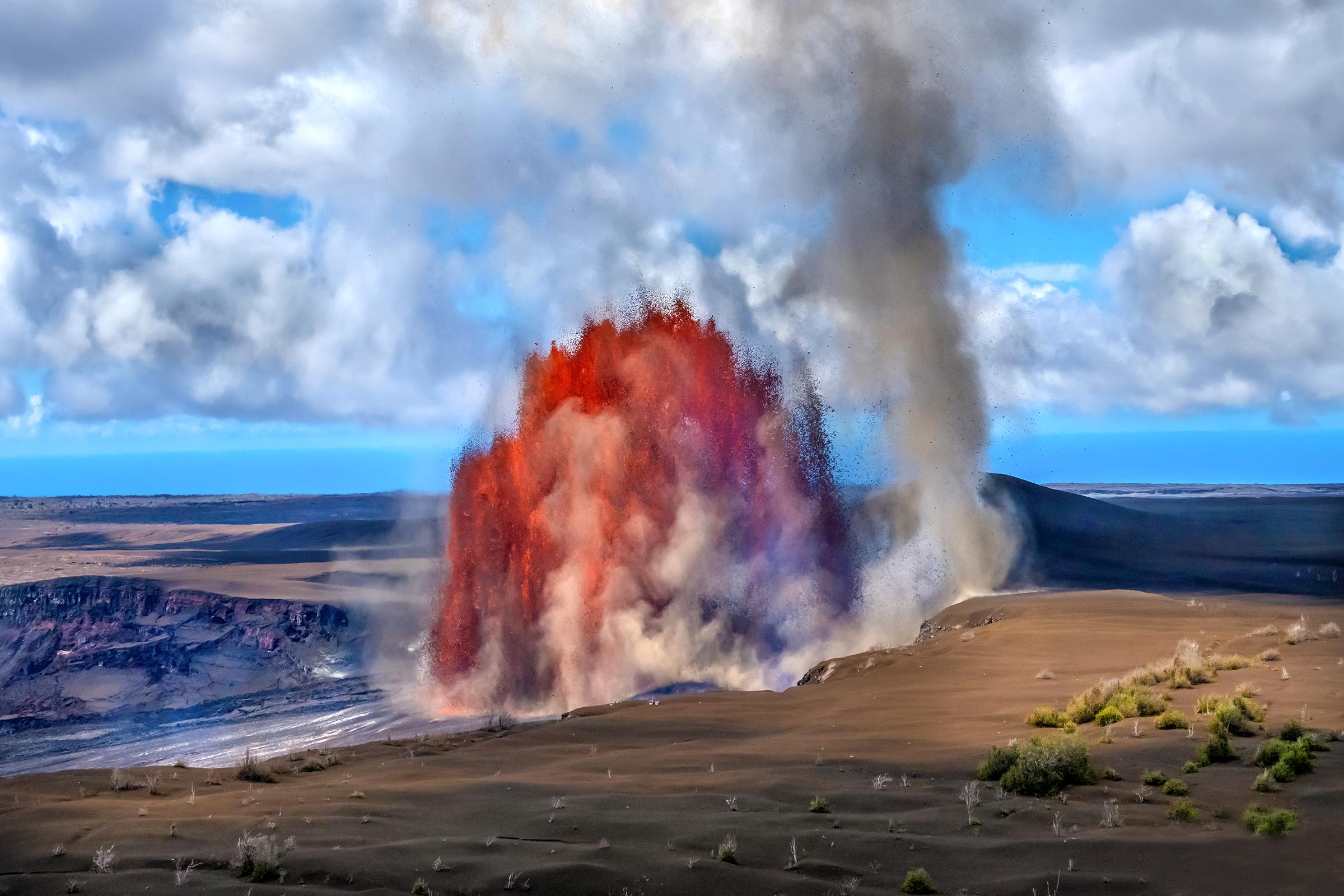
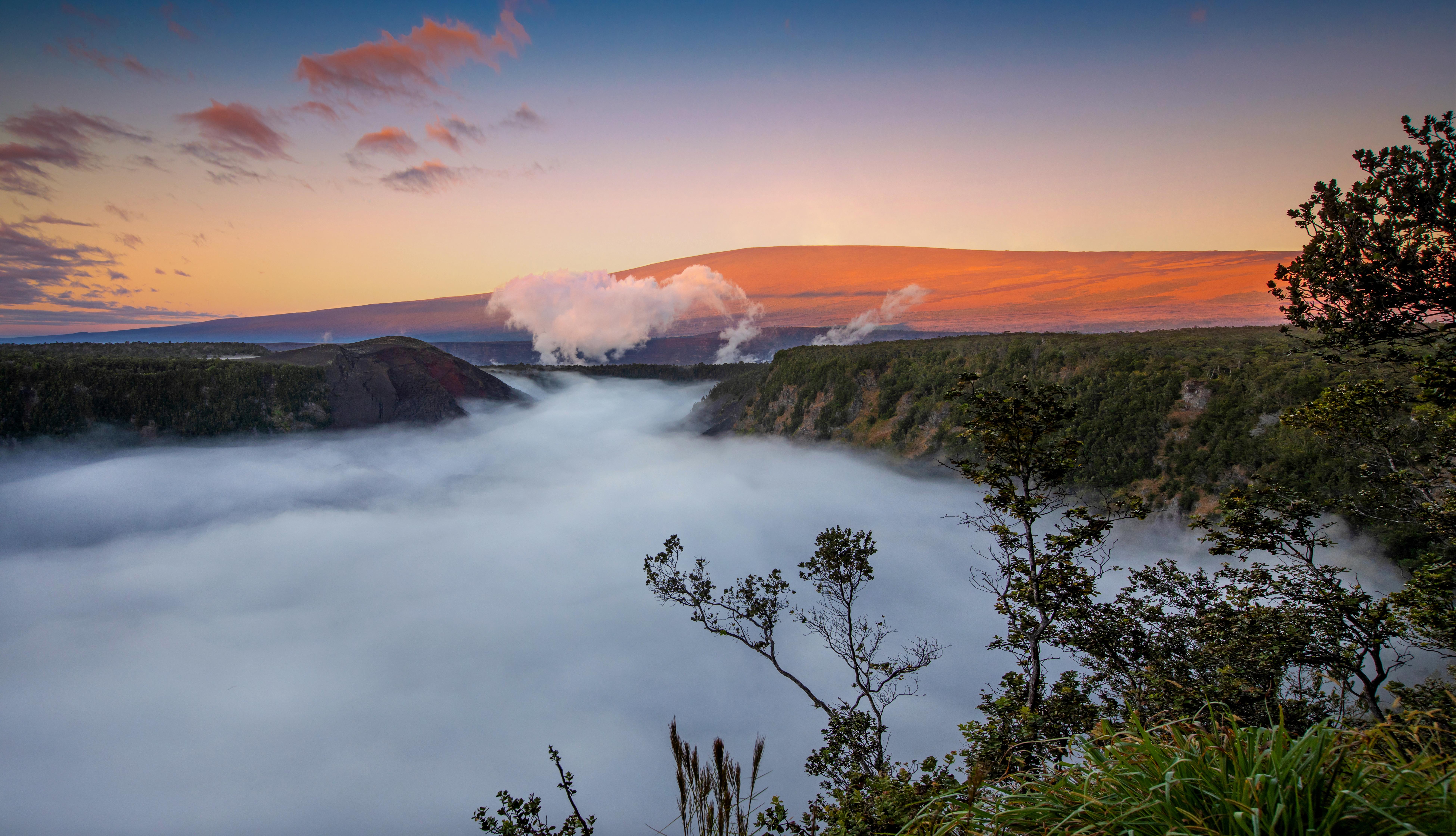
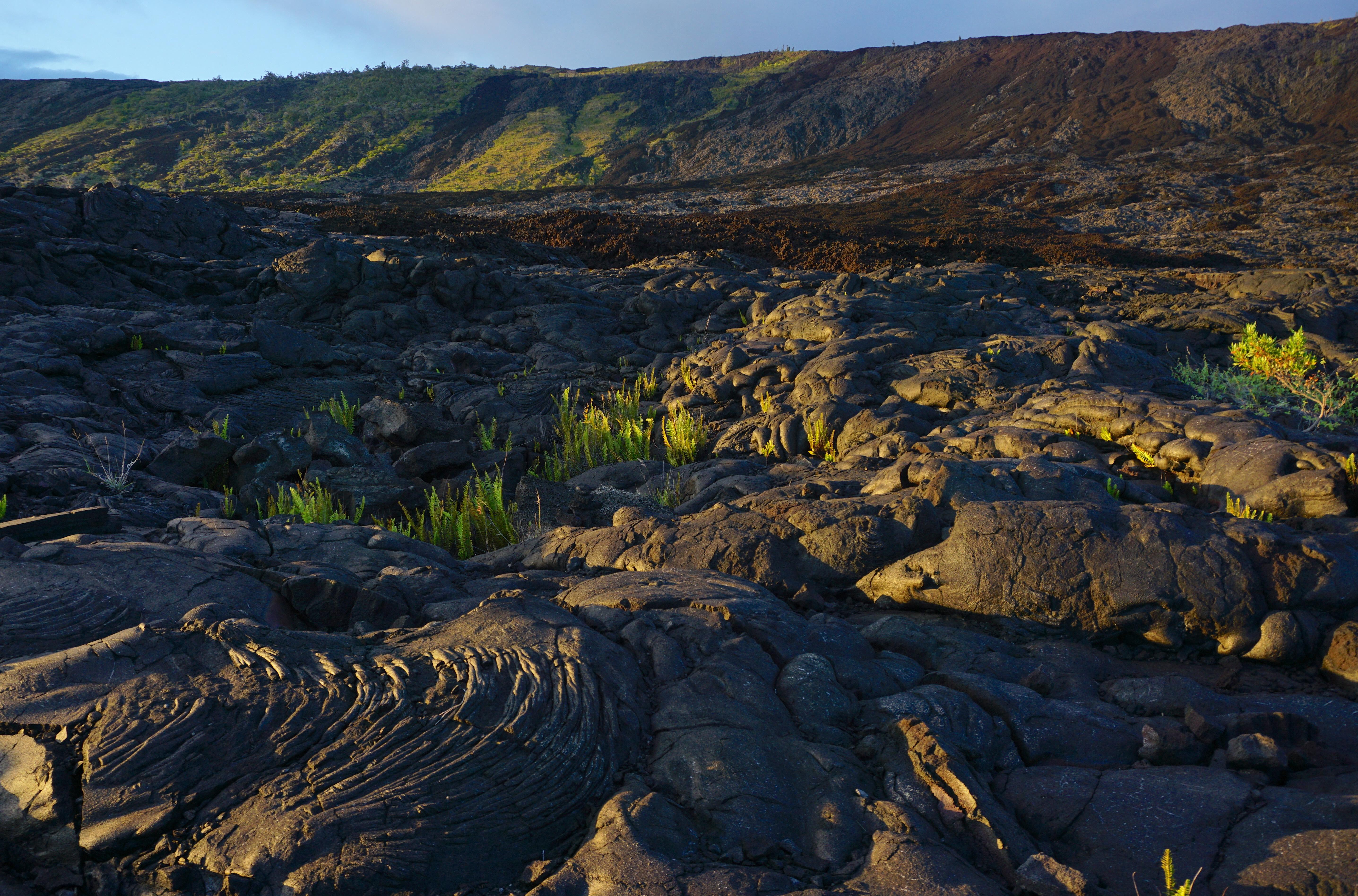
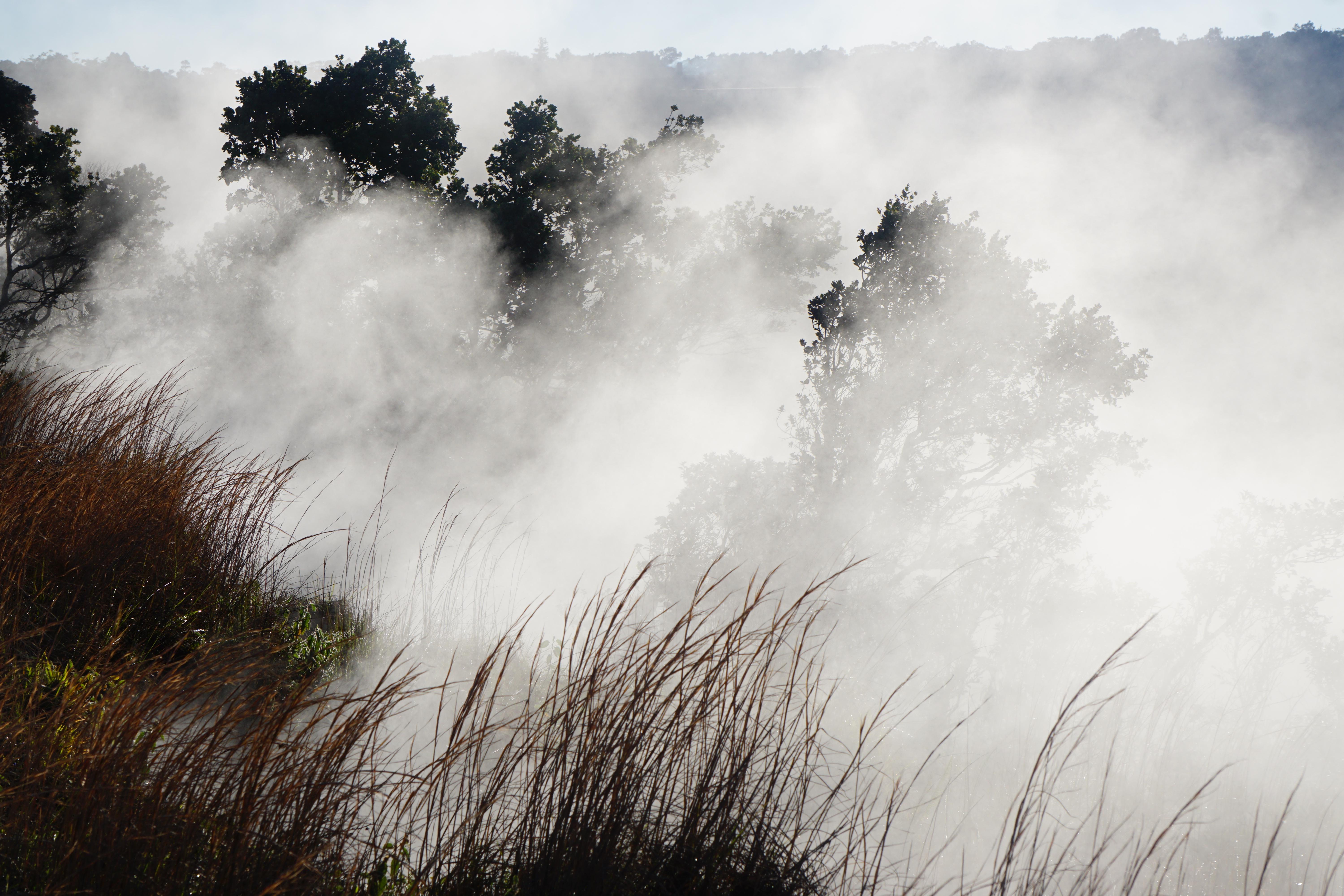
Hawai‘i Volcanoes National Park protects some of the most unique geological, biological, and cherished cultural landscapes in the world. Extending from sea level to 13,680 feet, the park encompasses the summits of two of the world's most active volcanoes - Kīlauea and Mauna Loa - and is a designated International Biosphere Reserve and UNESCO World Heritage Site.
Vulkanische Aktivität und vulkanische Gase (Vog) können beeinflussen, welche Bereiche und Straßen geöffnet sind. Prüfen Sie vor dem Besuch die Hinweise zu Ausbrüchen und Luftqualität.
Weather comfort score from the NWS forecast for one representative point; tap a day to build a full hour-by-hour plan. Informational ranking built from National Weather Service forecasts, which change several times a day. It rates weather only — not safety, crowds, closures or road status. Check the park’s alerts and official conditions before you go.
Hilina Pali Road from the Maunaiki Trailhead to the lookout is closed to all use motorized vehicles from 6 a.m. to 4:30 p.m. Monday through Thursday for shoulder work. Hikers, bicyclists and backcountry permit holders will be given access but should expect delays while heavy machinery works on the road. The work should be complete by 11/30/26. The entire road will be open to all use outside of those hours including weekends and holidays.
Volcanic eruptions can be hazardous. Stay out of closed areas and monitor air quality. Eruptions can last a few hours and are often separated by pauses lasting several weeks.
Kīpukapuaulu Trail Closed Due to Hazardous Trees and Hanging Limbs
Kīpukapuaulu Trail remains closed due to numerous hazardous trees and hanging limbs resulting from several recent storms. Managers are developing a plan and will reopen the trail when it is safe.
Volcanic ash, rock and glassy strands (tephra) is present at Kīlauea summit and can irritate your skin, eyes and respiratory system. For your safety, do not handle it. Eye protection, long sleeves, long pants, a hat, closed-toe shoes and a dust mask are recommended.
The Sulphur Banks Bridge is damaged and closed until further notice. The Haʻakulamanu area, boardwalk and Sulphur Banks Trail are open and accessible from the west side near Steam Vents.
Upper Kahuku Road Closed Beyond Boot Decontamination Station
Upper Kahuku Road remains closed beyond the boot decontamination station due to storm damage. The Visitor Contact Station and most trails in the Kahuku Unit are now open following Hurricane Lala. Kahuku Road above the Lower Palm Trailhead is deeply rutted by the recent heavy rains. A 4WD is recommended to access areas above the Lower Palm Trailhead.
Private Vehicle Pass - The private vehicle pass admits the passholder and up to 14 passengers of a single, private (non-commercial) vehicle.
Entrance - Motorcycle$25.00
Valid for 7 days. Admits up to 2 private, non-commercial motorcycles with up to 4 total passengers.
Entrance - Per Person$15.00
Pedestrian/Cyclist Pass - Admits one individual bicyclist, hiker, or pedestrian visiting without a private vehicle. An individual pass is not required for visitors aged 15 and under.
Commercial Entrance - Mini-bus$100.00
The commercial entrance fee for a Road Based Guided Tour is based on vehicle seating capacity. For a 16-25 passenger vehicle the user fee is $100.
Commercial Entrance - Motor Coach$200.00
The commercial entrance fee for a Road Based Guided Tour is based on vehicle seating capacity. For a 26+ passenger vehicle the user fee is $200. Large vehicles, defined as more than 26 feet in length and/or more than eight feet wide, are only allowed to operate on Crater Rim Drive to Kilauea Visitor Center, Kūkamāhuākea (Steam Vents), and Uēkahuna. Mauna Loa
Hawai‘i Volcanoes National Park is open 7 days a week, 24 hours a day including holidays.
Kahuku Unit
The Kahuku Unit is open on Thursdays, Fridays, Saturdays and Sundays from 8 a.m. to 4 p.m. and is closed on Mondays, Tuesdays, and Wednesdays.
ACTIVITIES LISTED BY NPS
Arts and CultureBikingCampingBackcountry CampingCar or Front Country CampingGuided ToursHikingBackcountry HikingFront-Country HikingJunior Ranger ProgramWildlife WatchingBirdwatching
KURZANTWORTEN
Häufige Planungsfragen zu Hawaiʻi Volcanoes.
Erhebt der Hawaiʻi Volcanoes Nationalpark die $100 Nichtansässigen-Gebühr?
Nein. Der Hawaiʻi Volcanoes Nationalpark steht nicht auf der National Park Service Liste der 11 Parks mit der $100 Nichtansässigen-Gebühr. Die üblichen Eintrittsregeln gelten weiterhin.
The NPS feed lists a private-vehicle entrance fee of $30 for Hawaiʻi Volcanoes National Park. Annual passes cover entrance fees but not camping, tours or reservation fees.
Sind Hawaiʻi Volcanoes an gebührenfreien Tagen kostenlos?
An National Park Service gebührenfreien Tagen entfallen die Eintrittsgebühren für US-Einwohner. Alle 2026 gebührenfreien Tage sind bereits vergangen. Der National Park Service hat seine 2027-Termine noch nicht veröffentlicht.
Wo kann ich aktuelle Sperrungen im Hawaiʻi Volcanoes überprüfen?
Verwenden Sie die offizielle Seite des Parks für Aktuelle Bedingungen bezüglich Straßen-, Wanderwege- und Anlagenstatus. ParkVisitCheck zeigt NPS Warnungen aus der API an, die bis zu etwa zwei Stunden hinter der offiziellen Seite zurückbleiben können.
Gebührenregeln überprüft im November 5, 2026 anhand von nps.gov. Aktuelle Gebühren, Öffnungszeiten und Beschreibungen stammen bei Seitenaufruf von der NPS API.